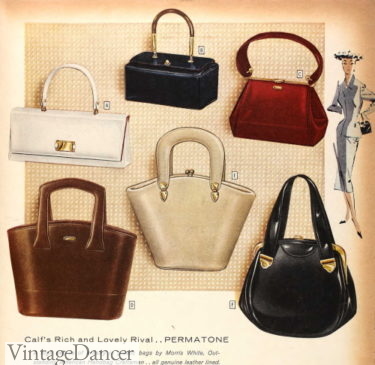
1957 purses
As bags and purses had established their purpose as an essential accessory during the 1940s, the importance of their role continued to progress into the following decade. By the 1950s, it was generally accepted that women would complete their attire with a fashionable handbag.
Indeed, there were many social conventions dictating which purse would be the ‘correct’ one to complement particular outfits. Conventions even existed on how to hold ones handbag in conjunction with the body.
This article will examine a history 1950s handbags and purses, in a continuation of our previous articles on 1930s and 1940s bags and purses.
Skip the history and buy 1950s style purses and handbags.
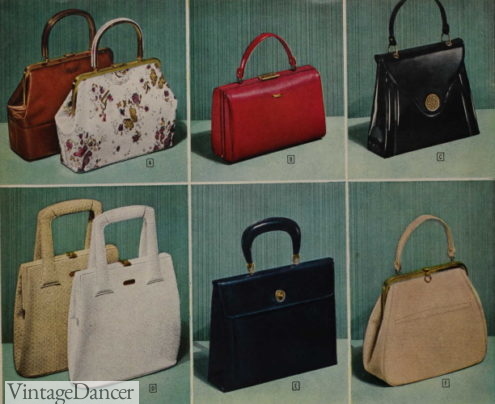
1958 handbags and purses- frames and large handle define the decade
1950s Handbag History
In the 1950s, handbags were finished with the logo or label of the denoting fashion house. This bestowed the wearer with the ability to visually convey their knowledge of fashion — and indeed, their personal wealth.
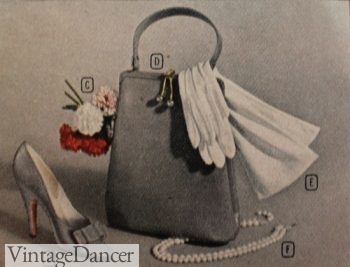
1958 Grey Handbag with Accessories
While many women entered the workforce during WWII, 1950s attitudes towards the role women were expected to fulfill regressed. Women were encouraged to marry and become the epitome of the perfect housewife. This role not only included taking care of her home and husband, but also presenting an immaculate personal appearance.
The 1950s housewife was expected to portray the image of domestic bliss in her perfectly set hair, polished fingernails, coordinating clothing, and of course, the status handbag.
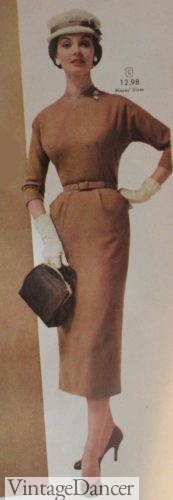
1958 Tan Dress with Tobacco Brown Handbag
1950s Famous Handbags
Perhaps the first ‘status handbag’ was the now famous Chanel 2.55. After being in retirement for over a decade, in 1954 Chanel reopened her fashion house. In keeping with her stylish yet comfortable aesthetic, the label produced classic designs with a boxy silhouette. The 2.55 handbag was created in February 1955 (hence the 2.55 title). The bag was made of padded and quilted leather or jersey, in a handful of neutral tones. Chanel chose to incorporate her logo on the inside of the bag within the lining, although the bag was instantly recognizable as a Chanel by its design alone.
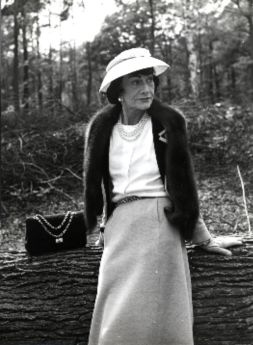
Chanel 2.55, a black quilted classic clutch shape with chain shoulder strap.
As in today’s times, a handbag could only reach a certain status due to a combination of factors. If a purse is beautifully made from the finest materials but nobody knows about it, then the purse will be unlikely to amass a great profit. However, if the purse is advertised effectively to the correct audience, it will be more likely to become a success.
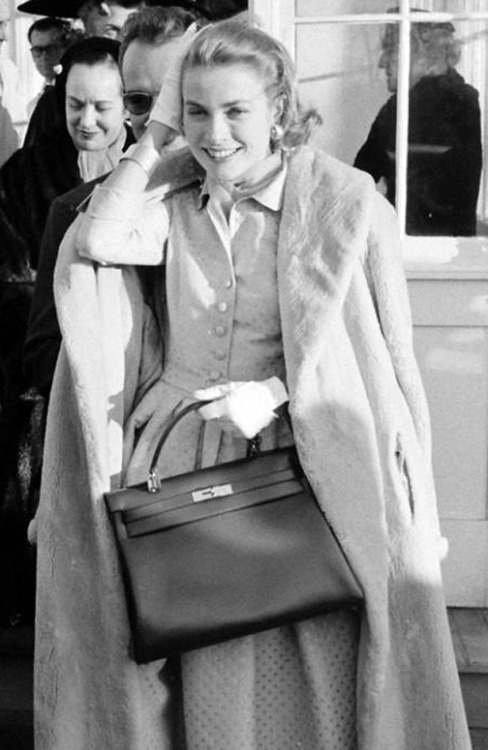
Movie star Grace Kelly pictured with her Hermes bag.
In the 1950s, there was an abundance of glamorous celebrities gracing the covers of magazines, newspapers and movie theaters. In 1956, Grace Kelly was pictured holding aloft her classic Hermes bag (with speculation that she utilized it conceal her pregnancy). Thereafter, the Hermes travel bag became known as the Kelly bag.
The Belly bag was large structured leather square-ish bag, with rounded corners and wider base supported by small feet in order to preserve the leather on the bottom. It also had a thin handle strap.
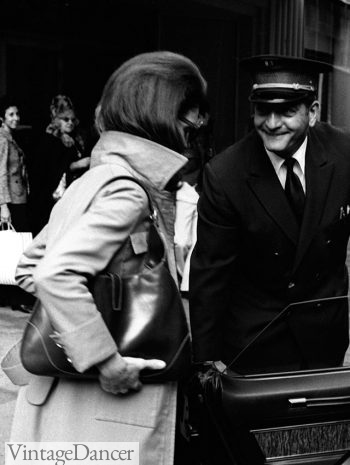
Jackie O carrying her Gucci bag
Similarly, Jacqueline Kennedy Onassis favored her Gucci shoulder bag, causing Gucci to rename it the ‘Jackie’ bag in the 1960s. It is often considered the birth of the hobo bag with rounded corners and a short shoulder strap held just under the armpit. She had several in solid and two tone patterns — perfectly complimenting her many fashionable clothes.
This craze for social acceptance continues to this day, with Vogue outlining some of the most coveted styles of the past 60 years in this article.
1950s Daytime Handbags
The three famous bags of the 1950s set the tone for women’s daytime handbags and purses regardless of wealth and status.
The 1940s required extra large bags to carry many personal items on a full day’s activities. 1950s women enjoyed more luxury reducing both the overall size but increasing architecture to match that of the padded and molded dresses of Dior’s New Look.
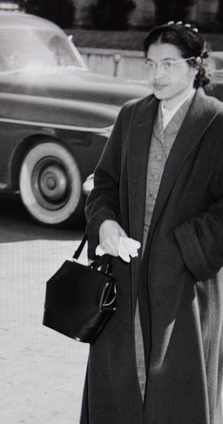
Rosa Parks carries a hexagon frame bag
Pleated bags, faille, taffeta, and cored rayon purses, box bags, pouches, and envelope bags continued to be offered to women into the 1950s. These were increasing simplified choosing a clean modern art approached to design. Bags lacked decoration in favor of smooth and plain plastics and leathers with small brass hardware.
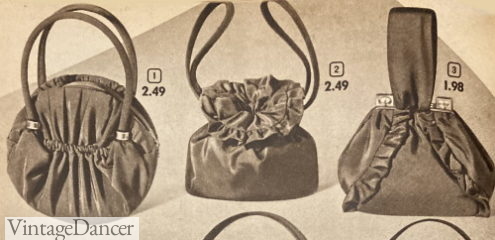
1951 faile purses for day or evening
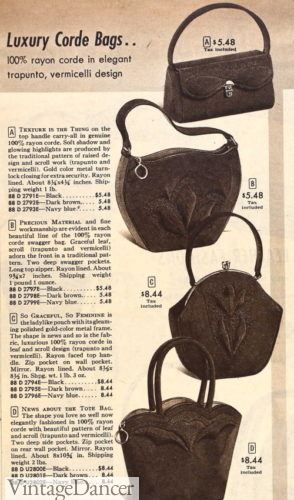
1955 corded rayon purses were still sold in the 50s
Most purses were built to be strong with solid shapes held by a metal frame. Even fabric purses were made in a stiff material and lined in leather to echo the all leather bodied handbags. The frame bag the bottom of the bag wider than the top.
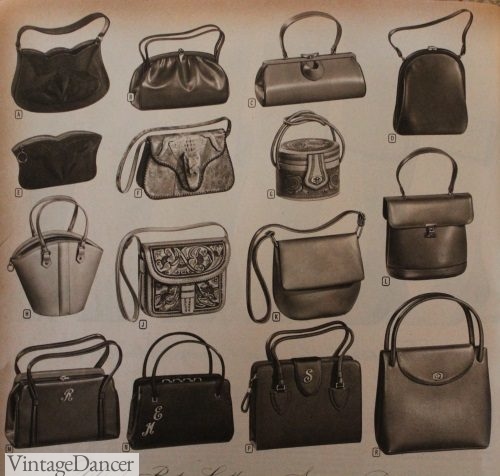
1955 Leather Day Bags
Th seriousness of the purse structure, the formality of design, was heavily inspired by the Victorian era and British royalty. They were often refereed to as grandma bags (I think, because they took the shape and stature of Victorian leather and carpet bags with large round handles).
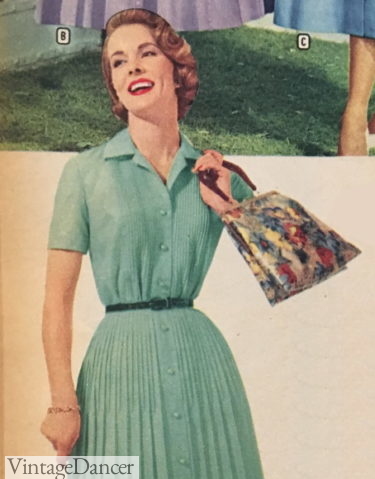
Victorian grandma bags
Exotic 1950s day bags were rich with expensive leather made of unusual animal skins. Antelope, calfskin, ostrich, gazelle, and pigskin with saddle stitching were just of few of the options. However, these were less common then they were in the 1940s.
-
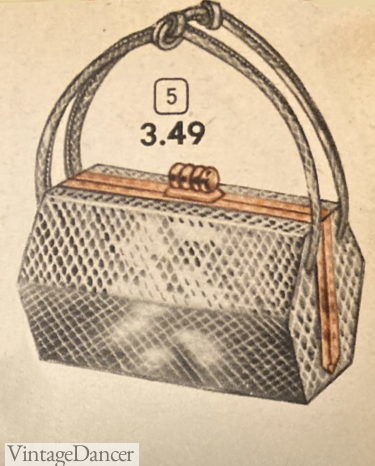
- 1951 snakeskin bag
-
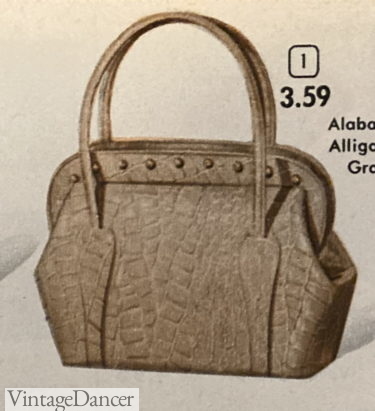
- 1953 alligator purse
Synthetic materials were often stamped to look like textured animal skins. Additional treatments, such as Chanel’s quilting, embossed leather (AKA Western style), shiny patent, and textured fabrics, added more interest to simple rectangular shapes.
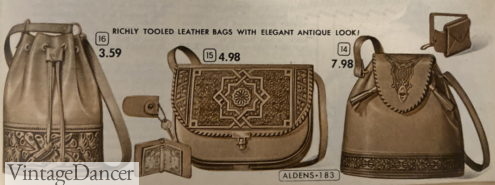
1953 western tooled leather bags
New inventions in fasteners, such as the twist lock, slide lock, briefcase lock, kiss lock, pinch lock, and a revival of the folding frame, contributed to the sophisticated yet modern aesthetic. Locks, flaps and trim were frequently made of gold or patent leather to add even more richness. Set against the primary color of the decade, black, the bags were anything but utilitarian.
-
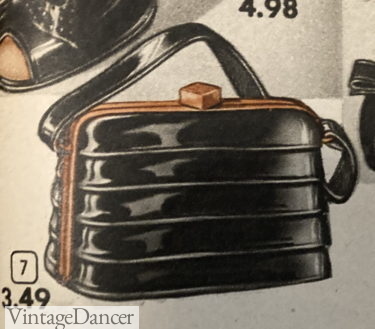
- 1951 twist lock patent leather pleated purse
-
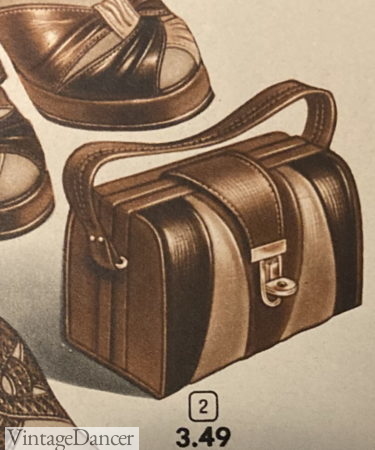
- 1951 twist lock on the front flap
1950s Fashion Bags- The Matching Game
As previously discussed, it was incredibly important for women to maintain a well put together appearance. By now, handbags and purses were very much thought of as an integral accessory with which to complete the overall ‘look’. Hats, gloves, shoes, belt, scarf, and bag were all expected to coordinate together, as individual notes brought together to form a perfectly toned melody.
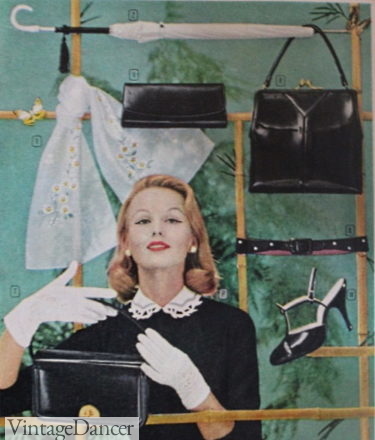
1955 black patent purses with matching black and white accessories
Many design houses offered to make matching fabric bags out of the same clothing material. Clothing catalogs paired dresses with matching handbags and accessories to encourage women to buy an entire wardrobe.
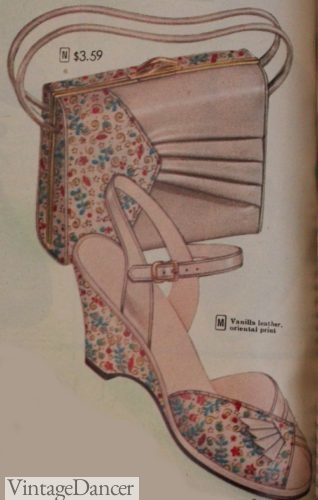
1956 matching purse and shoes
In the early years, it was considered too much to have bags match gloves and hats, only matching shoes were necessary. By the mid 1950s, that rule was replaced by the match everything aesthetic.
-
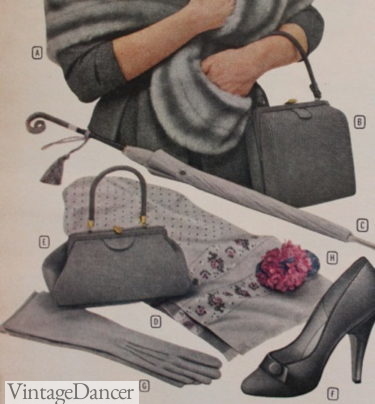
- 1957 grey purses and accessories
-
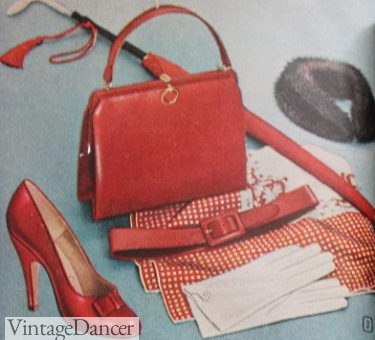
- 1957 matching red purse and accessories
In early 1950s America, there was a trend for black and white crocodile skin bags. Green alligator colored bags were also trendy. They were lined in red, often with a waterproof plastic material.
In 1954, colored leather was admired with bold yellow, pink, willow green, wedgewood blue, and lilac purple replacing black.
-
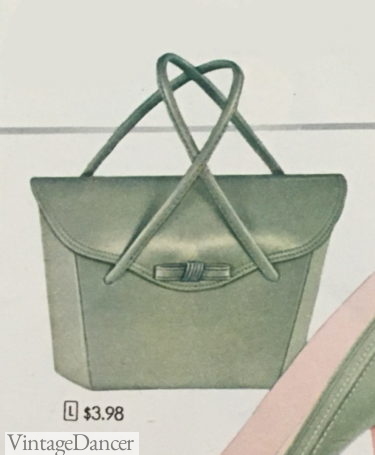
- 1957 green boxy purse
-
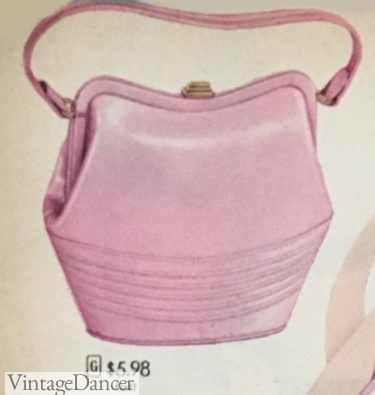
- 1957 pink molded purse
-
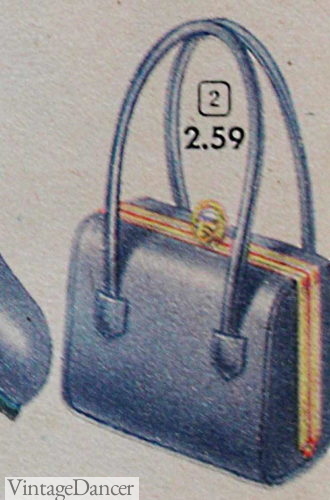
- 1952 Wedgewood blue purse
The red handbag with black trim was especially striking on the mid ’50s.
-
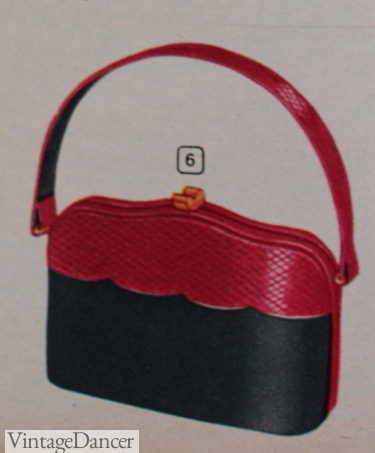
- 1950s black and red bag
-
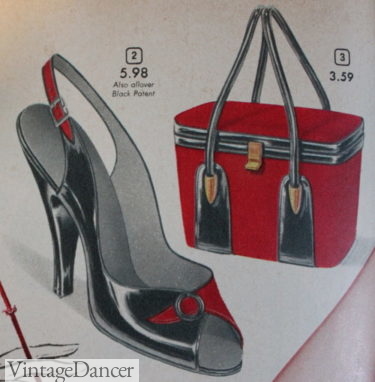
- 1950s black and red box purse
The color trend continued, although solid black never went out of fashion. Just like a little black dress, every woman had to have a black leather purse by her side.
-
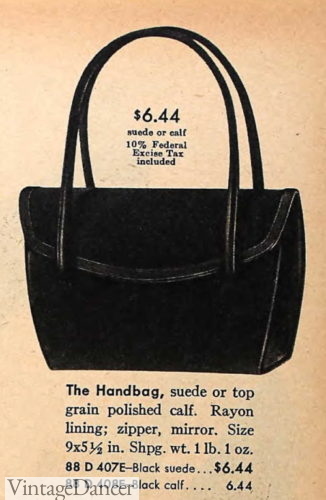
- 1957 black two handle handbag
-
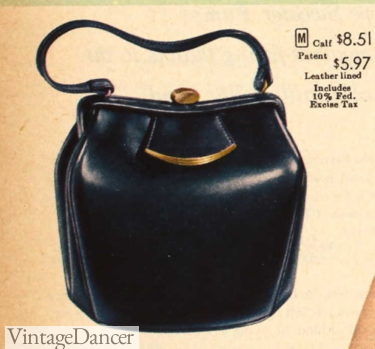
- 1957 black purple with brass trim
-
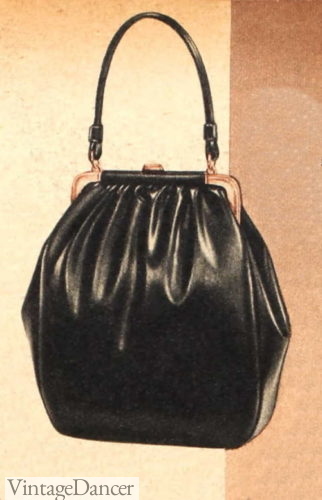
- 1959 ruched black frame purse
If black wasn’t the best choice for an outfit, then tobacco, cafe au lait, and other shades of tan and brown were welcome for fall/winter fashion. White had some presence in summer as well.
-
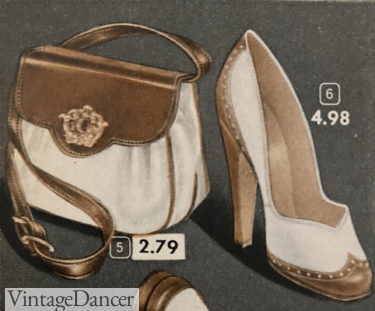
- 1951 brown and white spectator shoes and purse
-
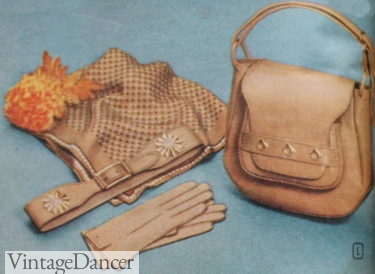
- 1957 tan leather bag and accessories
While leather and faux leather was the most sought after status material, cloth handbags remained a good option for the middle classes. Mohair, taffeta, and cotton bags trimmed in leather could be equally as dashing. Synthetic materials made cloth purses even more affordable. It was better to own a quality fake bag than a cheap leather bag.
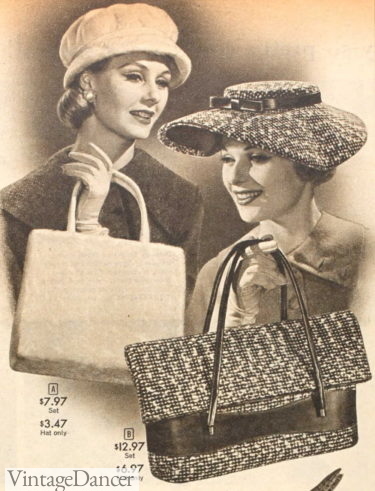
1959 mohair and tweed oversized handbags
The home knit or crochet bag was the most budget friendly option, although not as popular as it was in the 1940s. Knitters could whip up a simple reticle or tote bag with matching winter hat in their free-time.
-
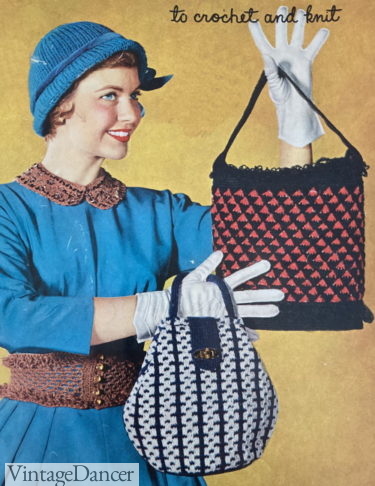
- 1954 knit bags
-
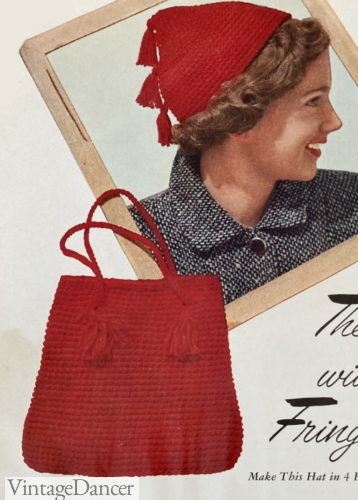
- 1950s knit tote bag and cap
-
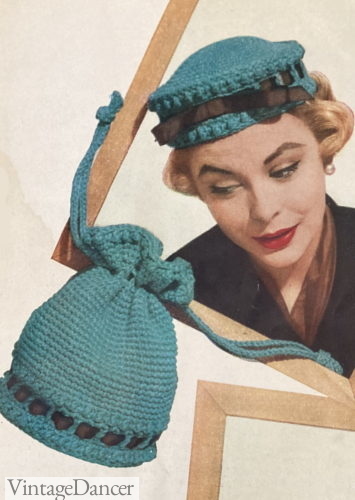
- 1950 reticle pouch bag and pillbox knit hat
Sewn handbags were more common, with a complete line of matching dresses and accessories.
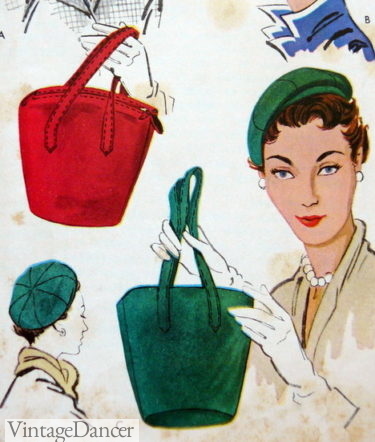
1950 sewing pattern for hats and bags
1950s Purses: New Shapes, Unique Materials
1950s handbags were not all large, structured, or even made of leather. Starting in the 1940s, unique shape bags such as a hard sided box bag and round drum bags provided an interesting alternative to ordinary purses.
Called vanity bags, they were smaller and prettier, reflecting the ornate makeup compacts they carried inside. Those with a top flat had a build in mirror.
-
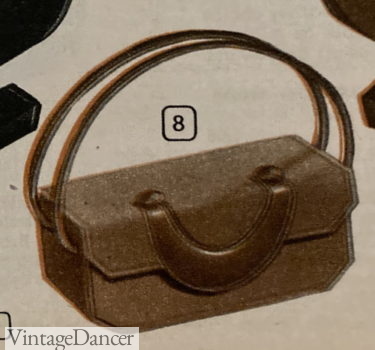
- 1953 brown double handle box bag
-
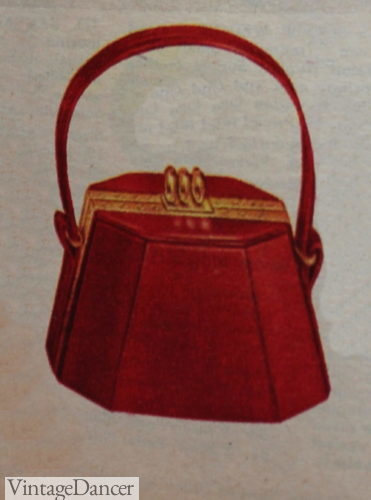
- 1951 red hexagon box bag
The trend for small bags of unusual shapes exploded in the mid 1950s. There was the hard and soft sided box bags, the tubular barrel bag, round canister bag, hexagon bag, oval bag, and casual basket bag. They were too small for day to day life, but as a dressy accessory they were perfect.
-
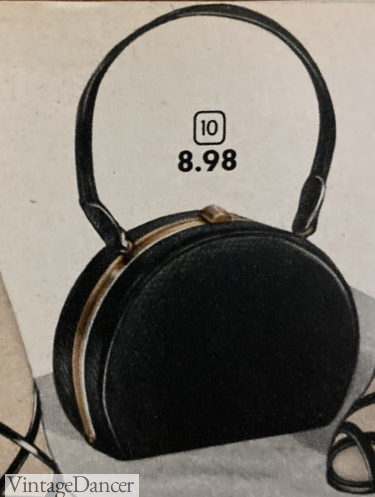
- 1951 half circle bag
-
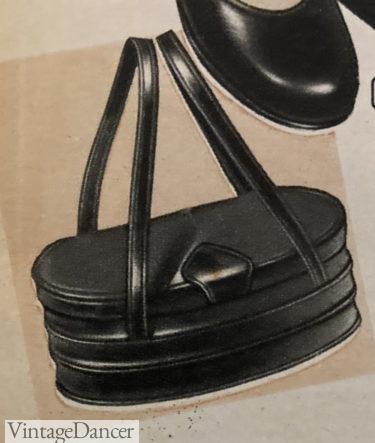
- 1953 Jelly bean purse
-
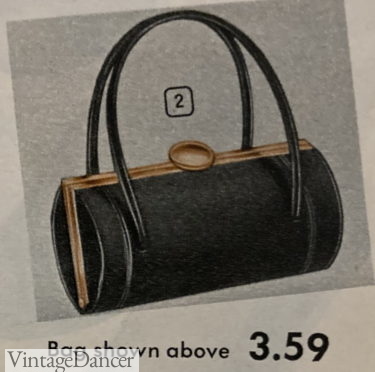
- 1953 barrel or music roll bag
-
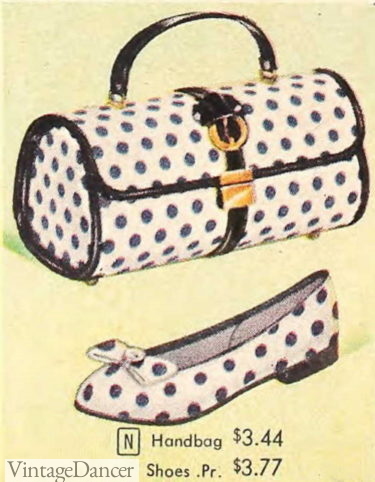
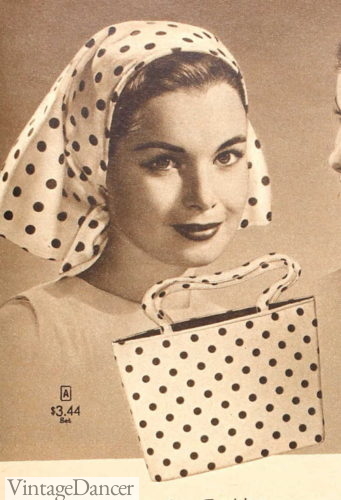
- 1958 polka dot barrel bag and flats
Shape alone wasn’t enough for the modern woman. Dress purses came in a diverse range of textures and treatments. Many plastic purses were printed to feel like animal skins. White summer bags were of pearlized plastic, or, in the case of cheaper bags, bonded paper with a pearl plastic coating.
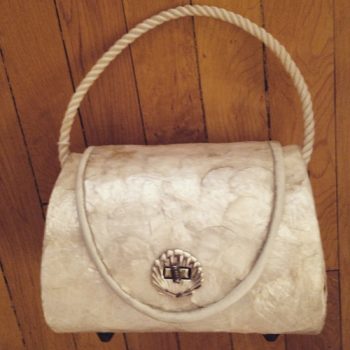
My vintage 1950s pearl finished bonded paper purse
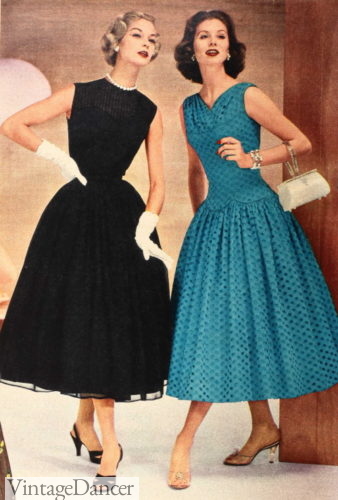
1957 cocktail dresses and a barrel purse with gold top
Handbag handles featured new shapes and materials. There were the popular bamboo, tortoiseshell, chain, and wood handles that came in square or hoop shapes. These hard handles often were paired with soft purses, and the opposite hard bags were paired with soft velvet, braid, or rope handles.
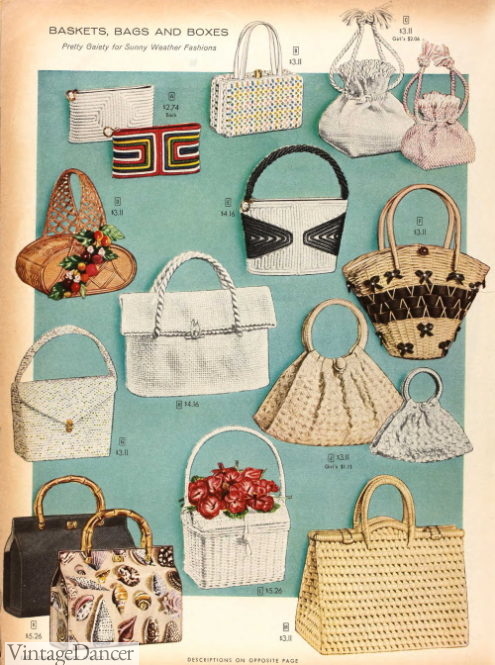
1957 summer bags- straws, woven, baskets, bamboo handles
Clutch Bags
The handle free clutch bag was not a new shape, but in the 1950s it was made in the same bright colors, plastics, and new materials. It was a dressy style handbag that paired well with slim pencil dresses, suits and cocktail party dresses. Frames and clasps were gold or brass to add even more richness and luxury.
-
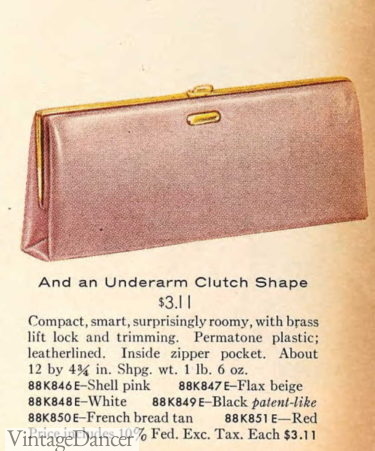
- 1957 pink pearlized clutch
-
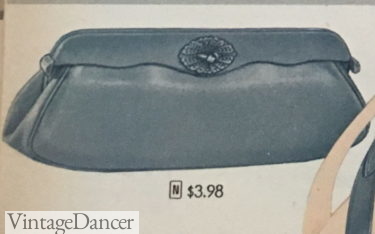
- 1957 blue-grey flap over clutch
-
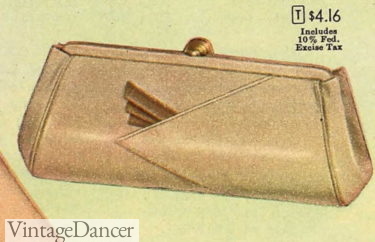
- 1957 gold, mid century design, clutch
-
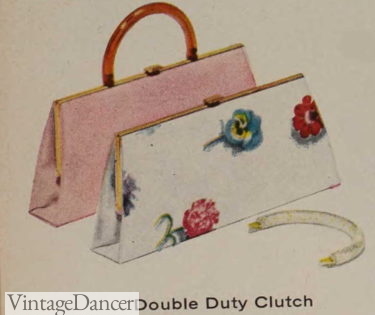
- 1958 optional handles clutch purses
The sleek designs called attention to the wearer and not the accessory.
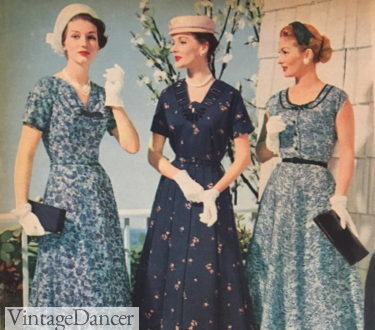
Formal afternoon dresses complimented by simple clutch purses
Straw Bags
In summer, there were ample materials to play with. Straw or coarse raffia was woven into small pouches, baskets and tote bags for the beach. Some featured additional flowers, fruits, and leaves inspired by the popular tiki party theme.
-
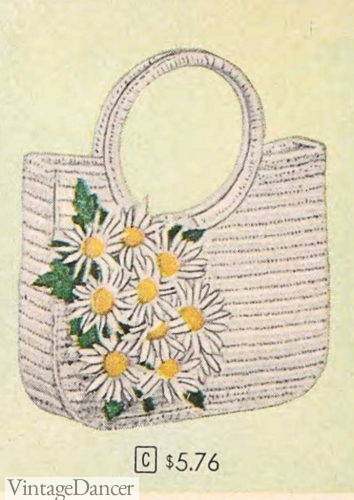
- 1958 white straw tote with daisy flowers
-
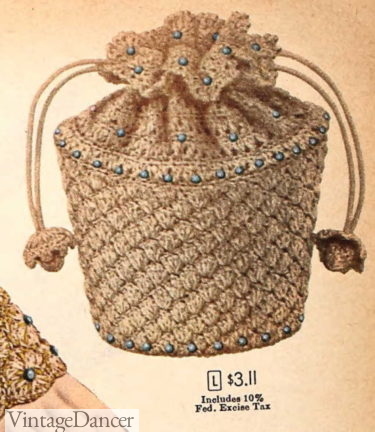
- 1957 Raffia straw woven into a reticule
The basket bag was literally a picnic basket used as a purse. They were ideal beach bags, and when shrunk down to a more manageable size, made charming summer purses.
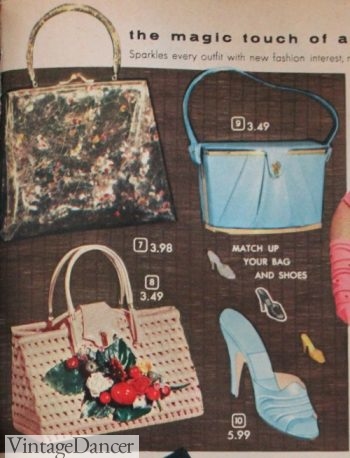
1956 The Straw Bag with tropical flowers is a collectable 1950s summer purse
They could be woven wood slats, raffia, straw, and even plastic. These new materials were woven into other bag shapes as well.
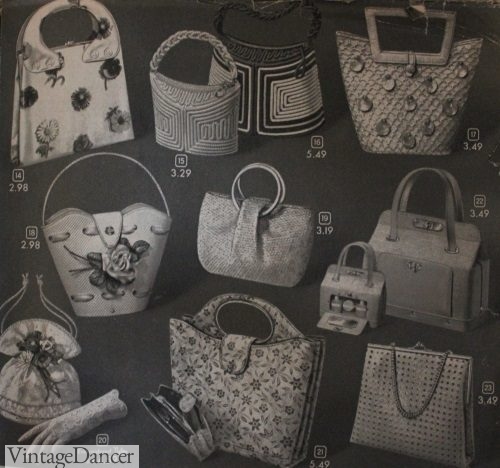
1957 Summer bags of woven plastic, raffia straw straw, and fabric
Cloth beach bags often matched head scarves, shoes and even sunglasses. The floral tapestry Victorian bag mentioned already is another example of a popular fabric bag.
1950s Lucite Bags
In the 1930s, designers such as Schiaparelli incorporated surrealist motifs into their designs in order to create an air of whimsy and fun. By the 1950s, this tone of whimsy was translated into handbags and purses made of seemingly impractical materials – such as Lucite.
Lucite was used during WWII in aircraft production, however after WWII, new uses were found for this glass-like material. Handbags were produced which were completely transparent – turning the notion of secrecy and concealment on its head. Lucite could also be colored in shades of pastel pink, powder blue, oyster, and pearl.
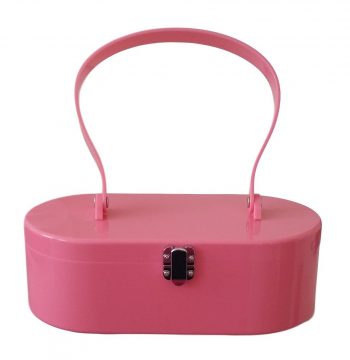
This Lola Von Rose bag is a perfect recreation of the popular Lucite styles of the 1950s.
Lucite bags could feature beautiful carved floral and sea life decorations in addition to glitter, jewels, and confetti, lending the bags an ethereal quality. Shapes were composed of boxes, buckets, beehives, and pagodas.
Although Lucite bags looked beautiful, they were not without their disadvantages. Heat could cause the material to dispense toxic fumes and liquid in addition to warping their shape. Lucite was particularly brittle, so it had to be handled with the utmost care.
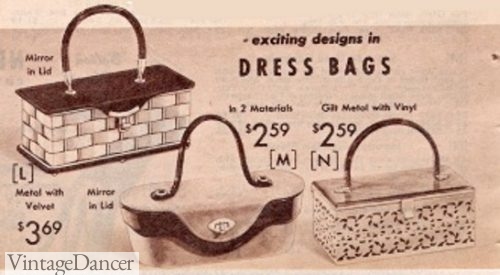
1957 Metal instead of Lucite box bags
For those who couldn’t afford Lucite, metal, wood, and other plastics were used to create similar designs at reduced prices. Teenagers were the primary consumers of faux Lucite bags. They adored cute designs with poodles, frogs, fish, elephants, and other animals embellished on them.
Clear plastic was a brief fad as well as white and black plastic that looked like shiny patent leather.
-
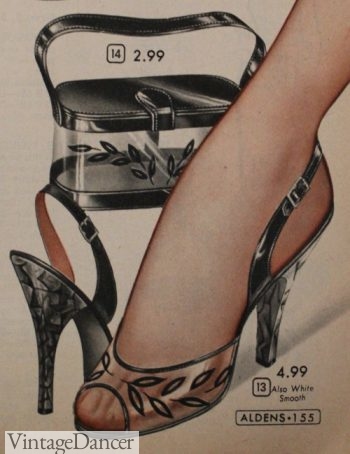
- 1957 Clear Plastic Bag with Matching Clear Shoes
-
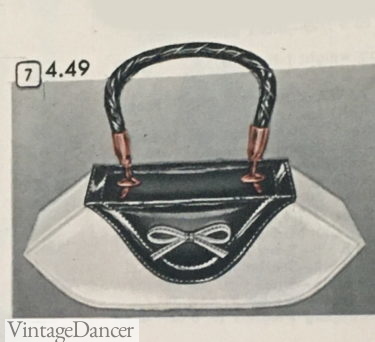
- 1958 plastic black and white bag purse
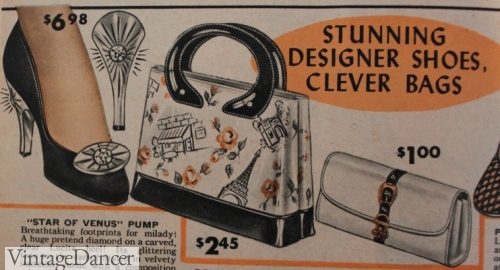
1950s Novelty Painted Bag and Clutch
Drawstring Bag
One final unique shape bag was the drawstring bag. It was not a new design. Pouchettes or reticules have been common purses since the 18th century. Usually made of fabric or crochet yarn, the drawstring with two wrist handles was an easy to carry travel bag. Traditionally round, the 1950s version also included square or rectangle bags with a drawstring top.
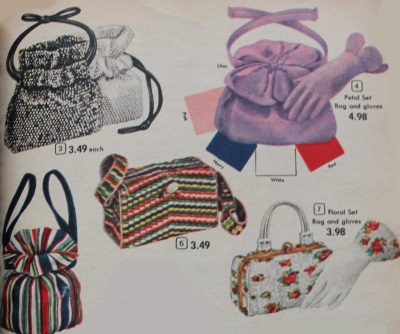
1953 Fabric Drawstring Purses
The drawstring bag could be informal or formal. The 1950s woman tended to wear them with casual summer outfits and beachwear but also made use of them at spring tea parties. They could hold very little so they were primarily a decorative accessory.
-
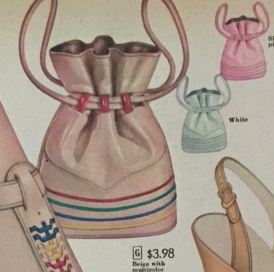
- 1956 summer drawstring bags
-
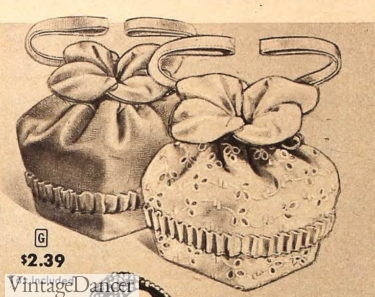
- 1950 eyelet cotton pouch bags
Shoulder Bags
The late 1940s introduced the long strap shoulder bag as a practical and casual option for the busy woman. In the 1950s these continued to be offer in simple brown leathers. Inspired by the Italian style they could also be influenced by Western designs with drawstring tasseled ties, brass hardware, and large buckles.
-
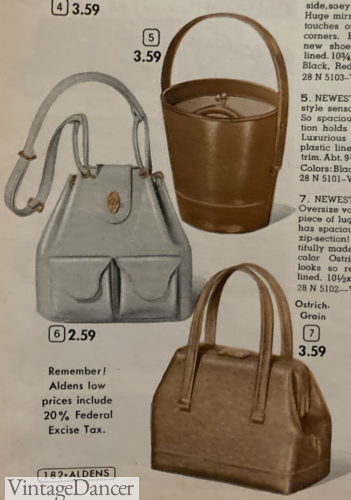
- 1953 casual open bucket, shoulder bag and luggage style
-
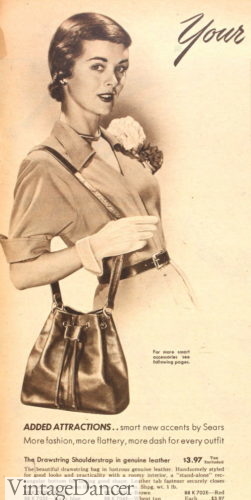
- 1951 carrying a shoulder bag
-
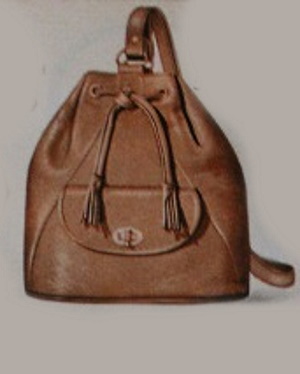
- 1957 western style shoulder bag
A similar casual bag, often with a long shoulder strap, was the bucket bag. It had an open top like a tote for easy access or it could zip closed, flap over, or fold in sides for security. The minimalist designs was in keeping with the Italian trend in the late 1950s.
-
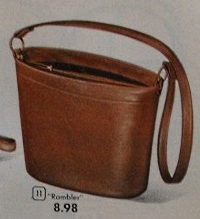
- 1957 zip close bucket bag
-
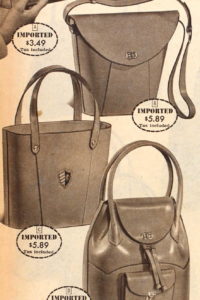
- 1955 bucket bags, flap closed or open style
-
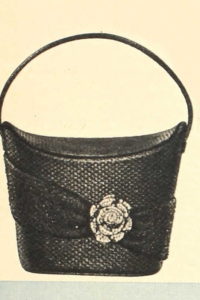
- 1959 straw bucket with fold in flaps
The leather tote bag, like the summer fabric bag, was yet another oversized casual bag for women. Simple, practical, and sturdy it could carry all. It makes a great choice today for the modern woman who needs to carry everything (and new moms who need a vintage diaper bag.)
-
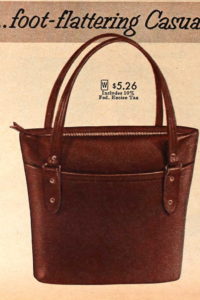
- 1957 zip top tote bag
-
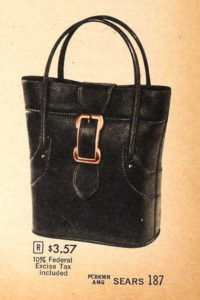
- 1959 buckle strap tote bag
-
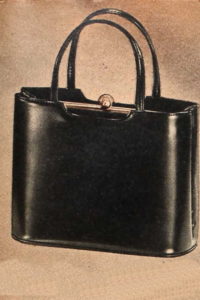
- 1959 kiss lock tote bag
Going into the 1960s purses were increasingly inspired by luggage. The travel bug had hit American women so they dressed like they were on Vacation to the Italian Riverian, Spanish country-side, Parisian city, or the Wild West.
Leather purses were now mostly brown, with chunky hardware, wider “luggage handles” straps, and panels of heavy tweed textured fabrics. They were also quite large.
-
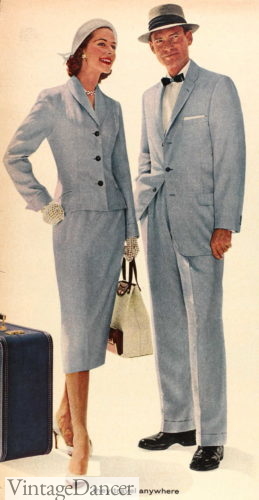
- 1958 travel ready handbag
-
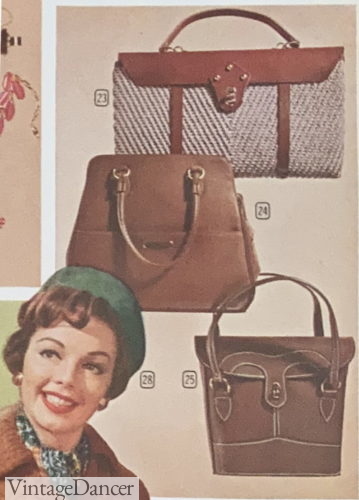
- 1959 luggage style handbags
Large handbags were also inspired by men’s briefcases and travel bags.
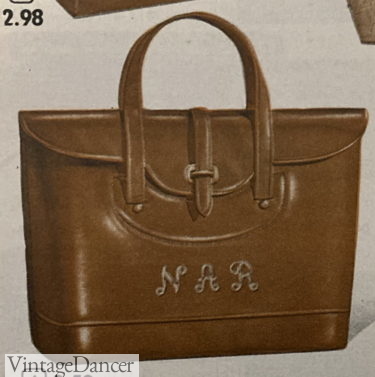
1954 briefcase style bag with monogram
1950s Evening Bags
In keeping with the styles of evening bags of the ’30s and ’40s, 1950s evening purses remained small. Rectangular clutches in black velvet, suede, or silk were carried in hand. Black was chic unless you were wearing a black gown, which most women did.
-
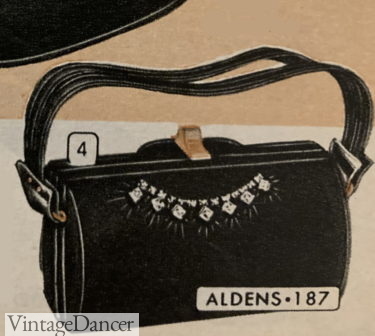
- 1953 black evening back decorated with crystals
-
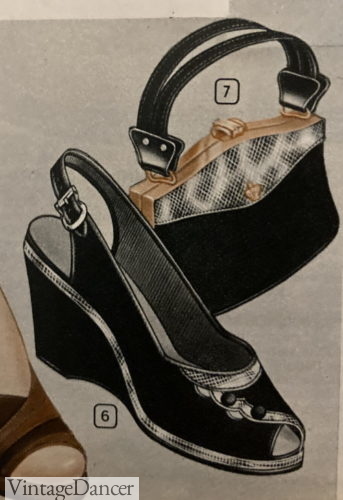
- 1953 gold frame purse with matching heels
-
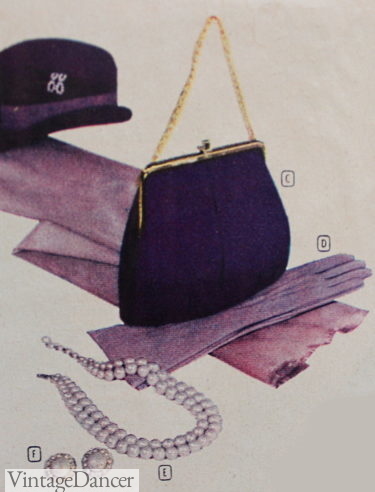
- 1957 purple velvet evening bag with gold chain
As a contrast, evenings bags glimmered with all over rhinestones, sequins, beads, metal mesh, and diamante for the very rich. If these were still expensive, then a plain bag with a sparkling clasp and short metal strap was just enough to hang gracefully from the fingers of long gloves.
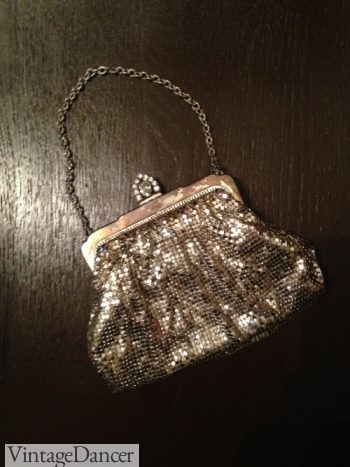
Vintage 1950s Whiting and Davis Mesh Evening Bag
Women who were now used to day purses with shoulder or large handle straps insisted on evening bags with straps as well. Short straps on chain matched bags with bling. Gold metal handles were another option.
Clutches were a timeless classic. Like daytime clutch bags they were simple, smooth, and undecorated. They could match the dress or contrast in either black or white.
-
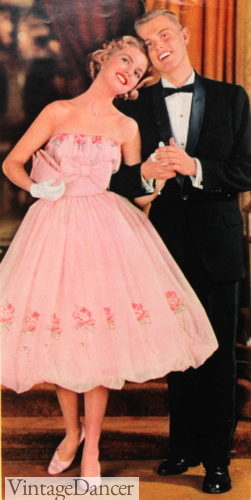
- 1957 pink clutch purse
Wallets, Coin Purses
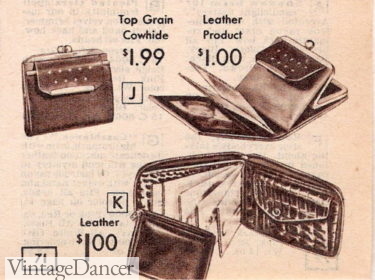
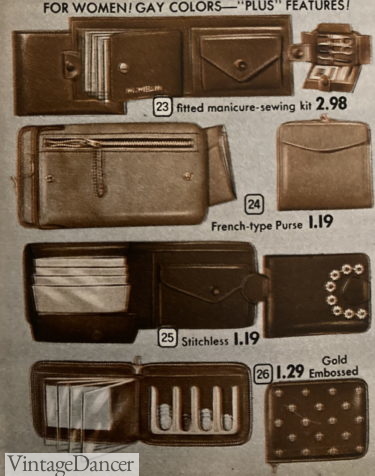
Most women had accounts at their local shops, making it unnecessary to carry much cash or charge cards. Purses had several compartments built inside for women to hold a note pad, mirror, makeup, bits of cash and a matching coin purse, which was often included.
Separate coin purses, billfolds, and wallets were available for women to purchase. Many of the were fold open wallets with an attached coin purse on one side and card holders on the other. The coin purses zipper, kiss locked, or snapped closed with a flap.
-
- 1957 wallets with coin purses
-
- 1953 wallets
1950s Handbags and Purses Today
To go with vintage 1950s clothing a genuine vintage handbag or purse is the best accessory. Try our search tool here:
Shop –> Vintage 1950s Handbags
For the drawstring bag use the Reticule search term. Make you own purse with sewing or crochet vintage patterns.
Small vintage inspired novelty bags have become highly collectible today. Many vintage clothing designers had also made unique handbags such as Collectif, Lulu Hun, Ruby Shoo, and Banned. Some shops that carry these and similar brands are:
- Unique Vintage– Day and evening handbags, clutches, purses
- Modcloth- Quirky handbags
- Ecosusi – Cute handbags, backbacks, briefcase and tote bags
- Sourpuss – Gothic, rockabilly, punk 50s styles
- Top Vintage (UK) – Mixed bands, mixed styles. I love it all. Quick USA shipping.
- Collectif (UK)- Fun, 50s style handbags
- Rock N Romance (UK) – Classic frame bags, faux reptile skins
- Esty – WoodyEllen– Handpainted tiki bags
- Etsy – Handmade Retro Top Shop – Leather 1950s bags large enough for modern women
- Amazon – Can be a goldmine for vintage style frame purses, faux leather casual bags, straw purses and tote styles.
Shop New 1950s Style Handbags
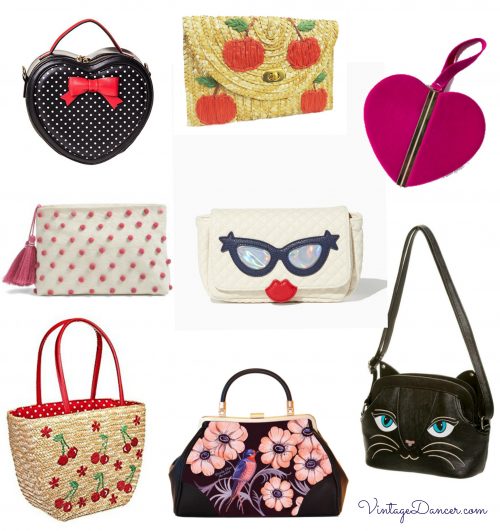
Fun handbag shapes inspired by the 1950s. Shop Now.
Debbie Sessions has been teaching fashion history and helping people dress for vintage themed events since 2009. She has turned a hobby into VintageDancer.com with hundreds of well researched articles and hand picked links to vintage inspired clothing online. She aims to make dressing accurately (or not) an affordable option for all. Oh, and she dances too.